Yes, wireless BMS is necessary for electric vehicles due to its numerous benefits.
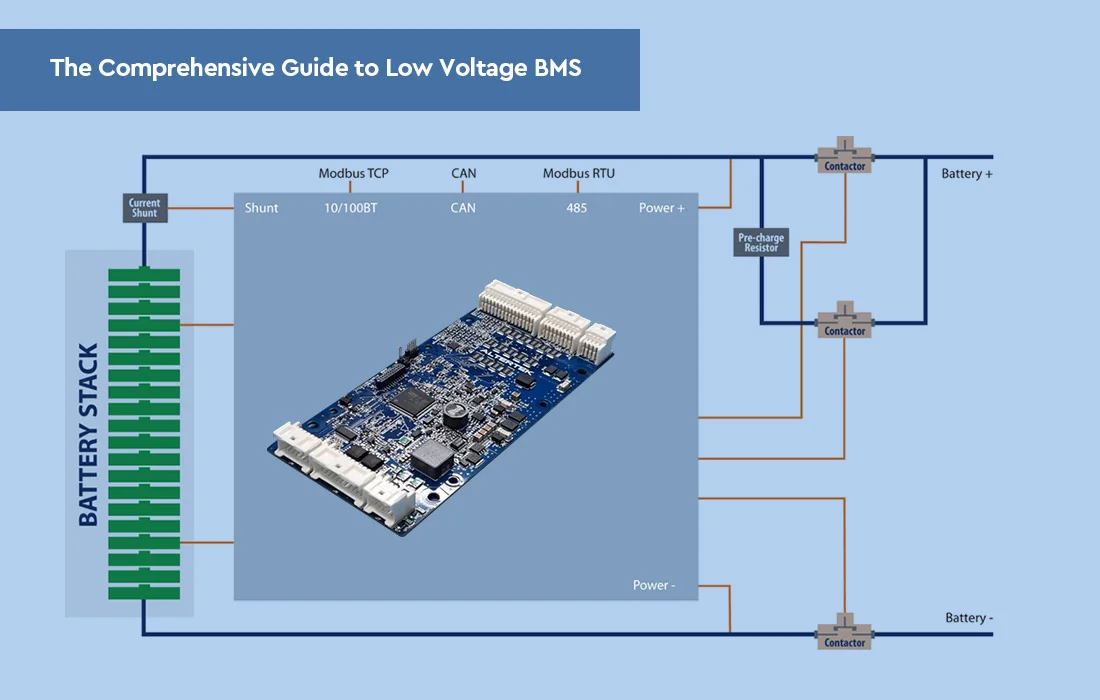
- The essence of wireless BMS is to use wireless communication technology to reduce the connection line between slave control CSU, slave control, and master control BMS, while the voltage & temperature sampling, as well as the voltage and temperature transmission to the slave control CSU program is not affected; in addition, the control connection line between BMS and relay, Pyrofuse, the whole vehicle VCU is not affected, these places the current mainstream program can be used. All these places can be used.
- The current BMS program has a lot of shortcomings because of the existence of connecting wires (required for signal transmission):
(1) The wiring harness and its plug-in connectors have always been the place where more failures and malfunctions occur. Reducing the existence of these connectors can reduce the failure rate of the battery pack and improve the safety and reliability of operation;
(2) Wiring harnesses and their plug-in connectors require additional consideration of their alignment and space when the whole pack is arranged, which consumes valuable available space in the battery pack, and reducing their presence can improve the volumetric energy density of the whole pack;
(3) Wiring harnesses (often copper wires), and their plug-in connectors, add extra weight and cost, which can reduce the energy density of the battery pack and increase the cost of the whole vehicle;
(4) wire harness and its plug connector are often needed for manual assembly, which will increase the whole package production of man-hours, increase labor costs, reduce these production processes, improve production efficiency, and reduce manufacturing costs. - In summary, the wireless solution saves more than 10m of wire and 0.5kg of connectors per vehicle, depending on the vehicle model. Therefore, for every 50,000 vehicles produced, 500km of wire and 25,000kg of connectors will be saved. While saving costs, it also meets the trend of automobile light-weighting.
MORE: How to understand that a wireless BMS battery management system will become the mainstream of lithium battery pack?